
Airless Pump Bottles: How They Work & Why Brands Use Them

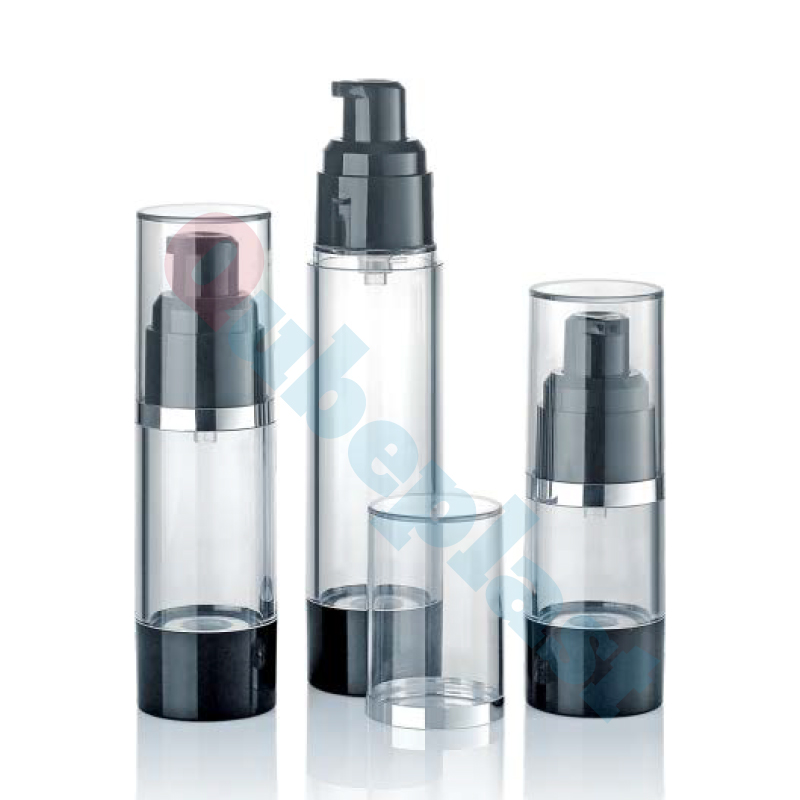
Airless Pump Bottles: How They Work and Why Serum Brands Use Them
If you’re building a skincare brand, the packaging you choose can quietly make or break your formulation. Nothing hurts more than a customer posting a photo of your Vitamin C serum turned orange-brown within a month of purchase. In most cases, the culprit isn’t the formula — it’s the packaging letting air in.
That’s exactly the problem Airless Pump Bottles were designed to solve. In this guide, we’ll break down how airless technology actually works, why India’s fastest-growing D2C serum brands are switching to it, and how to decide whether it’s the right choice for your product.
What Is an Airless Pump Bottle?
An airless pump bottle is a dispensing system that pushes product out without letting air back in. Unlike a regular pump bottle — which uses a dip tube and pulls air into the bottle every time you press it — an airless bottle uses a vacuum mechanism and a rising piston to dispense product.
The result: your formulation stays sealed from oxygen, contamination, and moisture from the first pump to the last.
How Do Airless Pump Bottles Work?
The mechanism is simple but clever. An airless bottle has four key components:
- The pump head — dispenses a measured dose of product with each press
- The airtight chamber — holds the formulation with no headspace air exposure
- The rising piston (or follower disc) — a movable base plate inside the bottle
- The vacuum system — created between the pump and the piston
Here’s what happens when you press the pump:
- The pump draws product from the top of the chamber
- This creates negative pressure (a vacuum) inside the bottle
- Instead of air rushing in to fill the space, the piston at the base rises upward
- The piston keeps the product pressed against the pump, ready for the next dose
Small vent holes at the bottom of the bottle allow air to enter behind the piston — but that air never touches your product. The formulation stays in a sealed, shrinking chamber until the very last drop.
The key difference from a regular pump: a standard pump bottle has a dip tube (the straw you see inside) and pulls outside air into the bottle with every press. An airless bottle has no dip tube at all — if you unscrew the pump and see a flat disc inside instead of a straw, you’re looking at airless packaging.
Why Serum Brands Specifically Choose Airless Packaging
1. Active Ingredients Oxidise Fast
Vitamin C (L-ascorbic acid), retinol, niacinamide, peptides, and plant-based actives are all sensitive to oxygen. Every time air enters a regular bottle or a customer dips a finger into a jar, oxidation accelerates. That’s why Vitamin C serums in ordinary droppers or pumps often discolour and lose potency within weeks of opening.
Airless bottles dramatically slow this process because the product never contacts fresh air inside the container. For serum brands, that means:
- Longer shelf life after opening — often 2–3x compared to open-neck packaging
- Actives stay potent — the product performs the way your lab tested it
- Fewer complaints and returns — no “my serum changed colour” reviews
2. Lower Preservative Load
Because the formulation is protected from air and finger contact, brands can often formulate with milder preservative systems. That’s a genuine selling point for “clean beauty” positioning — and increasingly, Indian D2C customers read ingredient lists.
3. Up to 95%+ Product Evacuation
Regular pump bottles waste product. The dip tube stops working when the level drops below its reach — customers end up shaking, tapping, and eventually throwing away 10–15% of what they paid for. The rising piston in an airless bottle pushes nearly every last millilitre to the pump. Customers notice, and it shows up in reviews.
4. Precise, Hygienic Dosing
Each press dispenses a consistent dose (typically 0.2–0.5 ml depending on the pump). For actives like retinol where over-application causes irritation, controlled dosing is a real product-experience advantage — and it means the customer’s 30ml bottle lasts exactly as long as your marketing promised.
5. Premium Shelf Presence
Airless bottles simply look and feel more premium. The weighted base, the smooth piston action, the click of a locking pump head — these details signal quality before the customer has even tried the product. For D2C brands competing on Instagram and Nykaa listings, unboxing experience is marketing.
Airless Bottle vs Regular Pump Bottle: Quick Comparison
| Feature | Airless Pump Bottle | Regular Pump Bottle |
|---|---|---|
| Air exposure | None — vacuum sealed | Air enters with every pump |
| Best for | Serums, actives, eye creams | Lotions, shampoos, body wash |
| Product evacuation | 90–95%+ | 80–85% (dip tube limitation) |
| Preservative requirement | Lower | Higher |
| Works upside down | Yes | No |
| Cost per unit | Higher | Lower |
| Shelf life after opening | Extended | Standard |
What Products Should Use Airless Packaging?
Airless bottles are the right choice for:
- Vitamin C serums — the classic use case; L-ascorbic acid oxidises rapidly
- Retinol and retinoid creams — light and air sensitive
- Peptide and growth-factor formulations — high-value actives worth protecting
- Eye creams — small doses, premium pricing, hygiene-sensitive
- Anti-ageing creams and emulsions — thicker viscosities work well with piston systems
- Water-light gels and essences — with the right pump specification
They’re generally not necessary for wash-off products (cleansers, shampoos), simple moisturisers without sensitive actives, or high-volume budget SKUs where per-unit cost matters most.
Choosing the Right Airless Bottle: What to Check
Before you finalise packaging for your launch, evaluate these five things:
- Capacity options — 15ml, 30ml, and 50ml are standard for serums and eye creams; make sure your manufacturer offers the size your pricing strategy needs
- Pump dosage output — match the dose per press to your product’s usage instructions
- Material compatibility — PP and PETG chambers suit most formulations; confirm compatibility if your formula contains high levels of oils, acids, or essential oils
- Decoration options — screen printing, hot stamping, metallised finishes, and custom Pantone colours all affect your shelf presence and your cost
- Compatibility testing — always run a fill test with your actual formulation before committing to a production run
Buying Airless Pump Bottles in India: MOQ and Lead Times
For most Indian manufacturers, airless pump bottles are available at MOQs starting around 5,000 pieces, with customisation (colour, printing, finish) available at production quantities. Lead times typically run 2–4 weeks depending on decoration complexity.
If you’re launching your first SKU, ask your packaging partner for:
- Physical samples before ordering — feel the pump action yourself
- A small compatibility batch for stability testing with your formula
- Clarity on whether they manufacture in-house or trade imported stock (in-house manufacturing means better quality control, consistent supply, and faster reorders)
The Bottom Line
Airless pump bottles exist for one reason: to keep your formulation as effective on day 90 as it was on day 1. For serum brands built on active ingredients, that protection directly translates into product performance, customer trust, and repeat purchases.
If your hero product contains Vitamin C, retinol, or any oxygen-sensitive active, airless packaging isn’t a premium upgrade — it’s a formulation requirement.
FAQs About Airless Pump Bottles
Q: How do I know if a bottle is truly airless? Unscrew or examine the pump — an airless bottle has no dip tube inside. You’ll see a flat piston disc at the base of the chamber instead. Many airless bottles also work when held upside down, which regular pump bottles cannot.
Q: Do airless pump bottles work with thick creams? Yes. Piston-based airless systems handle viscous creams and emulsions better than dip-tube pumps, which struggle with thick textures. Confirm the pump specification with your manufacturer for very heavy balms.
Q: How much of the product actually dispenses? A well-made airless bottle evacuates 90–95% or more of the product, compared to roughly 80–85% for standard dip-tube pumps.
Q: What is the MOQ for airless pump bottles in India? MOQs typically start at 5,000 pieces for stock bottles, with custom colours and printing available at production quantities.
Q: Are airless bottles recyclable? Mono-material airless bottles (all-PP construction) are increasingly available and are easier to recycle than mixed-material designs. Ask your packaging supplier about mono-material options if sustainability is part of your brand positioning.
Q: Why does my first pump not dispense anything? Airless bottles need priming — 5 to 10 initial presses to create the vacuum and raise the piston to the pump. This is normal and worth mentioning on your product insert so customers don’t assume the bottle is faulty.
Looking for airless pump bottles for your skincare brand? Qubeplast manufactures airless bottles, jars, and closures in-house at our Delhi facility, with MOQs from 5,000 pieces and pan-India delivery.